
Spine Surgery: When Is It Needed and What Should Patients Expect?
Back pain, sciatica or neck pain can make walking, sleeping and working difficult. Many people then wonder whether they will need an operation, how painful it will be and how long recovery takes.
The reassuring news is that most spine problems are first treated without surgery. For people looking for spine surgery in Delhi, the most important step is a clear diagnosis from an experienced neurosurgeon.
Spine surgery may be needed when a spinal condition causes persistent pain, significant nerve compression, progressive weakness or trouble with daily activities, especially when non-surgical treatment has not helped enough. Not every back problem needs an operation. The decision depends on symptoms, a neurological examination, imaging and overall health. Consult a neurosurgeon to know what suits you.
What Is Spine Surgery?
Spine surgery covers procedures that treat conditions affecting the vertebrae, intervertebral discs, spinal cord, nerve roots and supporting structures. Its aims may be to relieve pressure on nerves, stabilise an unstable segment, correct certain deformities or treat a tumour, infection or injury.
The spine has four main regions:
- Cervical spine: the neck, with seven vertebrae.
- Thoracic spine: the upper and middle back, with twelve vertebrae.
- Lumbar spine: the lower back, with five vertebrae in most people.
- Sacrum and coccyx: the lower end, connecting with the pelvis.
Discs between the vertebrae act as cushions. When a disc, bone or other structure presses on the spinal cord or nerve roots, you may feel pain, tingling, numbness or muscle weakness. The surgical approach depends on the region involved, the diagnosis and your individual needs.
When Is Spine Surgery Necessary?
There is no single answer for everyone, but these situations may lead a neurosurgeon to consider surgery.
1Persistent Pain Despite Non-Surgical Treatment
Most neck and lower back pain is treated with physiotherapy, guided exercise, medicines and activity changes. If severe pain continues and a surgically treatable cause is found, surgery may become an option.
For example, a lumbar disc herniation may cause leg pain that disturbs sleep and work. If an MRI shows nerve compression matching your symptoms and other treatment has not helped, decompression may be discussed. Pain alone does not justify surgery; the source must be clearly identified.
2Progressive Weakness or Nerve Compression
Watch for difficulty lifting the front of the foot, climbing stairs, gripping objects or keeping your balance. Ongoing nerve compression can lead to further neurological problems, so prompt specialist evaluation matters. Surgery may be considered to relieve pressure on the nerve or spinal cord.
3Severe Sciatica That Does Not Improve
Sciatica is pain travelling from the lower back into the buttock and leg, sometimes with burning, tingling, numbness or weakness. It is often caused by a slipped disc or spinal stenosis. Most people improve without surgery, but it may be considered when severe symptoms persist, daily life is affected and imaging confirms matching nerve compression. A spine consultation for sciatica can clarify whether to continue conservative care.
4Spinal Stenosis Affecting Walking
Spinal stenosis is a narrowing of the spinal canal or the spaces for the nerves. In the lower back it may cause:
- Leg pain or heaviness when standing or walking.
- Numbness or tingling in the legs.
- Reduced walking distance.
- Relief when sitting or bending forward.
- Weakness in advanced cases.
When walking is severely limited and other treatment fails, decompression surgery may be recommended.
5Spinal Fractures or Instability
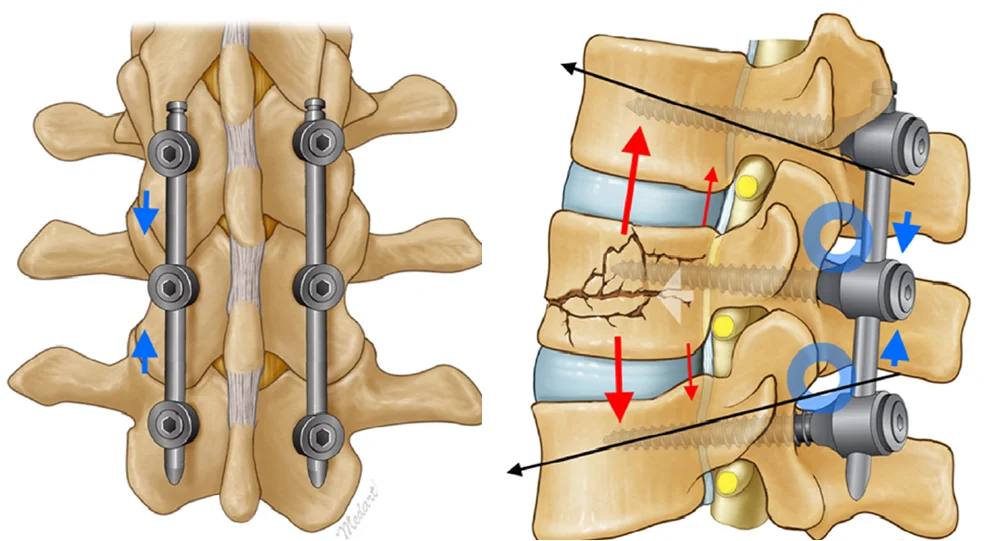
Falls and road accidents can cause vertebral fractures. Stable fractures often heal with non-surgical treatment and monitoring. Unstable fractures, significant deformity or nerve compression may need spine fixation (stabilisation) or decompression.
6Spinal Tumours, Infections or Deformities
The decision depends on the diagnosis, neurological findings, spinal stability and response to other treatment. A tumour compressing the spinal cord needs surgical assessment, and some severe infections need decompression, drainage or stabilisation along with medicines.
Warning Signs That Need Emergency Care
Some spinal symptoms should never wait for a routine appointment. Seek emergency care for:
- New difficulty passing urine or loss of bladder control.
- Loss of bowel control.
- Numbness around the groin, inner thighs or genital area.
- Rapidly developing or severe leg weakness.
- Sudden difficulty walking with neurological weakness.
- Severe spinal pain after significant trauma.
Bladder or bowel changes with saddle-area numbness or leg weakness can indicate cauda equina syndrome, a serious compression of nerves at the lower end of the spinal canal. Severe back pain with fever, especially if you are at higher risk of infection, also needs urgent assessment.
Common Spine Conditions That May Need Surgery
Herniated (slipped) disc
Part of the soft disc material pushes through its outer covering and may press on a nerve. A cervical herniation can cause shoulder and arm pain, while a lumbar one causes sciatica. Most improve without surgery; it is considered when symptoms stay disabling or nerve function is worsening.
Degenerative disc disease
Discs lose hydration and height with age. These changes are common and do not always cause pain. Surgery is not advised simply because an MRI shows degeneration; it is considered only when symptoms match the imaging and cause nerve compression or instability.
Cervical myelopathy
This is compression of the spinal cord in the neck. Symptoms include clumsy hands, trouble with buttons, poor balance, walking changes and arm or leg weakness. Unlike muscular neck pain it can progress, so early assessment matters and decompression may be needed to prevent further deterioration.
Spondylolisthesis
One vertebra slips forward over another. Mild, stable cases can be managed without surgery. Severe symptoms, nerve involvement or instability may need surgical evaluation.
Spine tumours and infections
Treatment may include medicines, radiotherapy or surgery. The goal is to treat the underlying disease while protecting neurological function and spinal stability.
Is Spine Surgery Always the First Option?
No. In most cases of uncomplicated lower back pain, neck pain or sciatica, treatment starts without surgery. This may include physiotherapy, medicines chosen by your doctor, activity changes and, in some cases, pain management procedures. Learn more in our spine health guide for a strong back.
Surgery is usually discussed when there is progressive weakness, serious nerve or spinal cord compression, instability, or disabling symptoms that match the scan and have not responded to appropriate care.
🦴Types of Spine Surgery
The right procedure depends on your diagnosis. Common approaches include:
- Discectomy: removing the part of a disc pressing on a nerve.
- Laminectomy or decompression: creating space for the spinal cord or nerves in stenosis.
- Spinal fusion or fixation: stabilising unstable segments or fractures with implants.
- Cervical decompression: relieving pressure on the spinal cord in myelopathy.
- Tumour or infection surgery: removing disease and protecting the spine.
Where suitable, minimally invasive spine surgery uses smaller incisions. Your surgeon will explain if it is appropriate for your condition.
What to Expect: Before, During and After
Before surgery
- A neurological examination and review of your MRI or CT scans.
- Pre-operative tests and a discussion of your medicines and health conditions.
- A clear explanation of benefits, risks and alternatives.
During surgery
Spine surgery is done under anaesthesia, so you do not feel the procedure. Duration and technique depend on the condition and the region of the spine.
After surgery
- Pain control and monitoring in hospital.
- Guided mobilisation, often starting early, as advised by your team.
- Physiotherapy and gradual return to activity. Recovery time varies by procedure and person.
- Follow-up visits to check healing and your progress.
Choosing a Spine Surgeon in Delhi
When looking for a neurosurgeon in Delhi, consider recognised qualifications, relevant training and experience with your condition. A good consultation explains your diagnosis, all options and the reason behind any proposed treatment. You can also read patient experiences before deciding.
Questions to ask your surgeon:
- What is causing my symptoms?
- Do I need surgery now, or can I try other treatment first?
- What are the benefits, risks and alternatives?
- How long will recovery take, and when can I resume work?

About Dr. Dibya Jyoti Mahakul
Dr. Dibya Jyoti Mahakul completed postgraduate surgical training at PGIMER, Chandigarh, followed by an MCh in Neurosurgery from AIIMS, New Delhi.
His hospital profile describes further training in Japan, South Korea, China and the United States, with expertise in minimally invasive spine surgery, cerebrovascular surgery, skull base surgery, neuro-oncology and endovascular neurosurgery. Read his full profile →
Patients from Delhi, Noida and IP Extension can contact his team to confirm availability.
For appointments: +91 93119 86200 or +91 79826 19638. Confirm the clinic and timing before travelling.
Frequently Asked Questions
When is spine surgery necessary?
When a spinal condition causes persistent pain, significant nerve compression, progressive weakness or instability, and non-surgical treatment has not given enough relief. A neurosurgeon decides after examination and imaging.
Does every slipped disc need surgery?
No. Most slipped discs improve with non-surgical care. Surgery is considered for disabling symptoms that persist or worsening nerve weakness. Book a consultation for a personal opinion.
Is minimally invasive spine surgery suitable for everyone?
Not always. It depends on your diagnosis and spinal anatomy. Your surgeon will explain whether it fits your condition. See the services page.
How long does recovery take after spine surgery?
It varies with the procedure, your health and the condition treated. Your surgeon will give guidance on walking, physiotherapy and returning to work.
Can I avoid spine surgery with exercise?
Many people improve with physiotherapy and exercise, but not every condition can be managed that way. Progressive weakness or bladder and bowel changes need urgent medical attention.
Can patients from Noida or IP Extension consult Dr. Mahakul?
Yes. They can contact his team to arrange a visit at his listed Delhi locations. Contact us.
Explore More
Worried About Your Spine?
Speak to Dr. Dibya Jyoti Mahakul’s team to confirm clinic location and appointment availability.