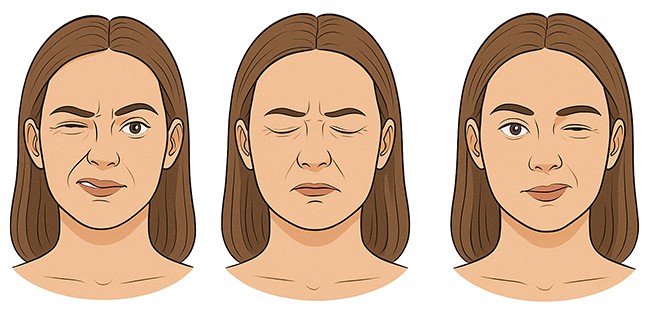
Hemifacial Spasm – Causes, Symptoms, Diagnosis & Advanced Treatment
Hemifacial spasm is a neurological disorder characterized by involuntary, irregular contractions of the muscles on one side of the face. It typically begins with mild twitching around the eye and may gradually progress to involve the cheek, mouth, and neck muscles. Although not life-threatening, the condition can be socially embarrassing, interfere with vision, and significantly affect a person’s quality of life if left untreated.
Hemifacial spasm occurs due to abnormal stimulation of the facial nerve (7th cranial nerve), which controls the muscles responsible for facial expressions. This nerve carries signals from the brain to the facial muscles. When it becomes irritated or compressed, it sends abnormal signals, leading to uncontrollable muscle contractions.
The condition usually affects only one side of the face and is more commonly seen in middle-aged and older adults, although it can occur at any age.
Causes of Hemifacial Spasm
The most common cause of hemifacial spasm is compression of the facial nerve by a nearby blood vessel at the point where the nerve exits the brainstem. This constant pulsation irritates the nerve, resulting in abnormal muscle activity.
Other possible causes include:
- Facial nerve injury or trauma: Damage due to accidents or surgical procedures
- Brain tumors: Growths that press on the facial nerve
- Vascular malformations: Abnormal blood vessel formations
- Infections: Conditions that affect the nervous system
- Multiple sclerosis (rare cases): A neurological disorder affecting nerve signals
In some patients, no clear cause is identified, which is referred to as idiopathic hemifacial spasm.
Symptoms of Hemifacial Spasm
Symptoms usually develop gradually and worsen over time. Common signs include:
- Twitching around the eye (blepharospasm): Often the first symptom
- Spasms spreading to the cheek and mouth
- Intermittent or continuous facial contractions
- Involuntary closing of the eye
- Facial tightness or pulling sensation
- Difficulty with vision due to frequent eye closure
In advanced cases, the spasms may become constant and more intense, even during sleep. Stress, fatigue, anxiety, and physical exertion can aggravate the symptoms.
Diagnosis of Hemifacial Spasm
Diagnosis is primarily based on clinical evaluation by a specialist. A detailed medical history and physical examination help identify the pattern of muscle contractions.
To confirm the diagnosis and rule out other conditions, imaging tests may be recommended:
- MRI (Magnetic Resonance Imaging): Helps detect nerve compression, tumors, or vascular abnormalities
- CT Scan: Used in certain cases for further evaluation
Early diagnosis is important to prevent progression and plan appropriate treatment.
Treatment Options for Hemifacial Spasm
Treatment depends on the severity of symptoms and the underlying cause. The main goal is to reduce or eliminate muscle spasms and improve quality of life.
-
Medications
Medications such as muscle relaxants or anticonvulsants may be prescribed in mild cases. However, they often provide limited relief and are not considered a long-term solution.
-
Botulinum Toxin (Botox) Injections
Botox injections are the most commonly used non-surgical treatment for hemifacial spasm.
- Temporarily relaxes affected muscles
- Reduces frequency and intensity of spasms
- Effects last for 3 to 6 months, requiring repeat injections
While effective, Botox does not treat the underlying cause and provides only temporary relief.
-
Microvascular Decompression (MVD) Surgery
Microvascular decompression is considered the most effective and definitive treatment for hemifacial spasm.
- The surgeon identifies the blood vessel compressing the facial nerve
- A small cushion is placed between the nerve and the vessel to relieve pressure
- Addresses the root cause of the condition
This procedure offers long-term or permanent relief in most patients when performed by an experienced neurospine surgeon.
Benefits of Advanced Treatment
- Significant reduction or complete elimination of spasms
- Improved facial function and symmetry
- Better vision due to reduced eye twitching
- Enhanced confidence and social comfort
- Long-term relief with surgical treatment
Risks and Complications
While treatments are generally safe, some risks may include:
- Temporary facial weakness
- Mild numbness
- Infection or bleeding (rare)
- Recurrence of symptoms in some cases
Choosing an experienced neurospine surgeon significantly minimizes these risks.
Recovery After Treatment
After Botox Injections
- Minimal downtime
- Patients can resume normal activities quickly
- Effects are noticeable within a few days
After Microvascular Decompression Surgery
- Hospital stay of 3–5 days
- Gradual improvement over weeks
- Most patients experience significant relief soon after surgery
Post-treatment care includes follow-up visits and monitoring for recurrence.