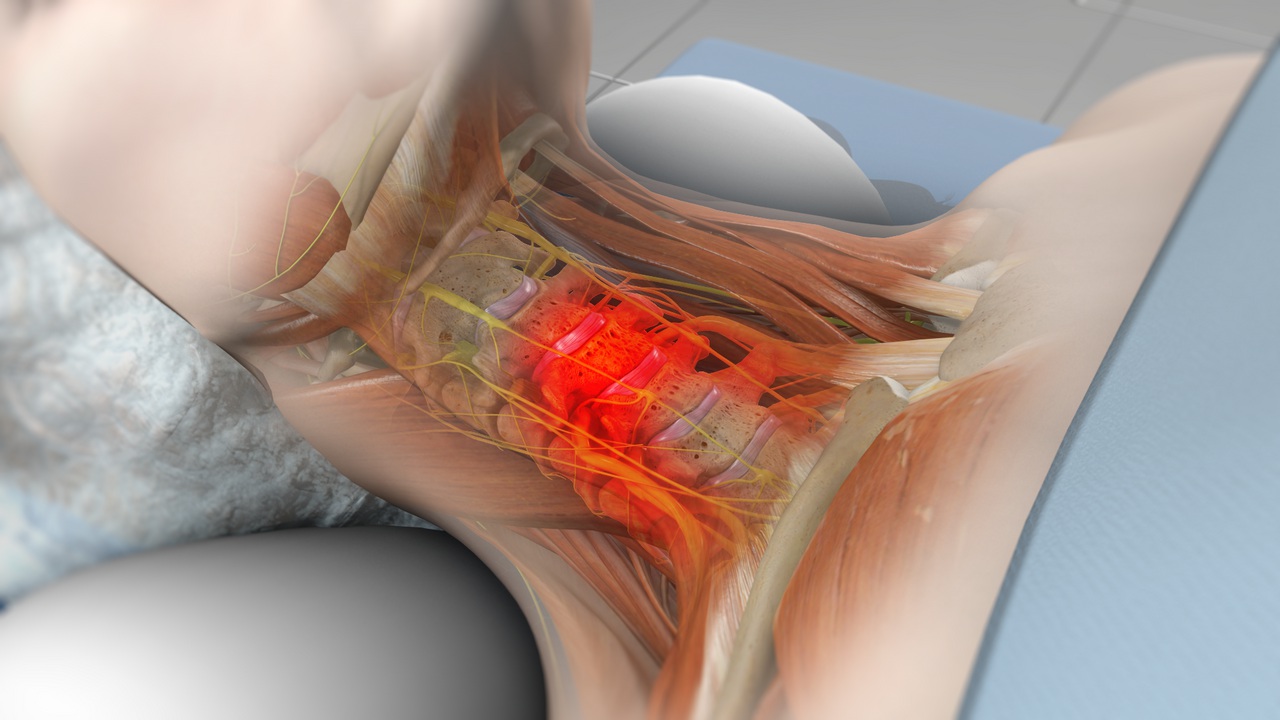
Discectomy and Fusion (ACDF) – Advanced Cervical Spine Surgery
Anterior Cervical Discectomy and Fusion (ACDF) is a commonly performed and highly effective surgical procedure used to treat nerve compression in the neck (cervical spine). It is recommended for patients suffering from conditions like herniated discs, cervical spondylosis, or spinal stenosis that cause pain, numbness, or weakness in the neck, shoulders, and arms. ACDF helps relieve pressure on the nerves and stabilizes the spine for long-term recovery.
What is ACDF?
ACDF stands for:
- Anterior: Surgery is performed from the front of the neck
- Cervical: Refers to the neck region of the spine
- Discectomy: Removal of a damaged or herniated disc
- Fusion: Joining two or more vertebrae to stabilize the spine
In this procedure, the affected disc is removed to relieve nerve pressure, and a bone graft or implant is placed to fuse the adjacent vertebrae.
Who Needs ACDF Surgery?
ACDF is recommended for patients who:
- Have persistent neck pain or arm pain not relieved by medications
- Experience numbness, tingling, or weakness in the arms
- Have a herniated or degenerated cervical disc
- Suffer from cervical spinal stenosis
- Have nerve compression affecting daily activities
Conditions Treated
- Cervical disc herniation
- Cervical spondylosis
- Cervical spinal stenosis
- Degenerative disc disease
- Nerve root compression (cervical radiculopathy)
Symptoms Indicating Need for Surgery
- Neck pain radiating to shoulders or arms
- Tingling or numbness in hands
- Muscle weakness in upper limbs
- Loss of coordination
- Difficulty performing daily tasks
If these symptoms persist despite conservative treatment, surgery may be advised.
Procedure Overview
-
Pre-Surgical Evaluation
Patients undergo imaging tests such as MRI, CT scan, and X-rays to confirm diagnosis and plan surgery.
-
Surgical Procedure
- Performed under general anesthesia
- A small incision is made in the front of the neck
- The damaged disc is carefully removed
- Pressure on the spinal cord and nerves is relieved
- A bone graft or artificial implant is inserted
- A plate and screws may be used to stabilize the spine
The procedure usually takes 1 to 3 hours, depending on the number of levels involved.
-
Post-Surgery Care
Patients are monitored and may be encouraged to walk within a day.
Benefits of ACDF Surgery
- Effective relief from nerve pain
- Improved strength and sensation in arms
- Stabilization of the cervical spine
- Prevention of further disc damage
- High success rate
Risks and Complications
Although ACDF is generally safe, potential risks include:
- Infection
- Bleeding
- Nerve or spinal cord injury
- Difficulty swallowing (temporary)
- Hoarseness of voice
- Failure of fusion (rare)
These risks are minimized with experienced surgical care.
Recovery After ACDF
Recovery varies depending on the patient and number of levels treated:
- Hospital Stay: 1–2 days
- Neck Support: A cervical collar may be used temporarily
- Return to Light Activities: Within 2–4 weeks
- Full Recovery: 6–12 weeks or longer
Bone fusion continues over several months.
Rehabilitation and Lifestyle Changes
- Follow physiotherapy exercises
- Maintain proper posture
- Avoid heavy lifting
- Gradually return to normal activities
- Maintain a healthy lifestyle
Success Rate of ACDF
ACDF has a high success rate, typically 85–95%, with most patients experiencing significant relief from pain and improved function.