Aneurysm Coiling, Balloon-Assisted Coiling & Stent-Assisted Coiling
Aneurysm coiling, balloon-assisted coiling, and stent-assisted coiling are advanced endovascular procedures used to treat brain aneurysms without the need for open brain surgery. These minimally invasive techniques help prevent aneurysm rupture, reduce the risk of bleeding, and provide effective long-term protection for patients with intracranial aneurysms.
Our experienced neurointerventional team specializes in state-of-the-art aneurysm treatment using the latest catheter-based technologies to deliver safe, precise, and effective care.
What is a Brain Aneurysm?
A brain aneurysm is a weakened or bulging area in the wall of a blood vessel in the brain. Over time, the aneurysm may enlarge and become prone to rupture, causing a life-threatening condition known as a subarachnoid hemorrhage.
Early diagnosis and treatment are essential to reduce the risk of complications and protect brain function.
Symptoms of a Brain Aneurysm
Many unruptured aneurysms may not cause symptoms. However, larger aneurysms can lead to:
- Persistent headaches
- Blurred or double vision
- Eye pain
- Facial numbness
- Difficulty speaking
- Balance problems
- Seizures
Symptoms of a ruptured aneurysm may include:
- Sudden severe headache
- Nausea and vomiting
- Neck stiffness
- Loss of consciousness
- Sensitivity to light
- Confusion
- Neurological deficits
A ruptured aneurysm is a medical emergency requiring immediate treatment.
What is Aneurysm Coiling?
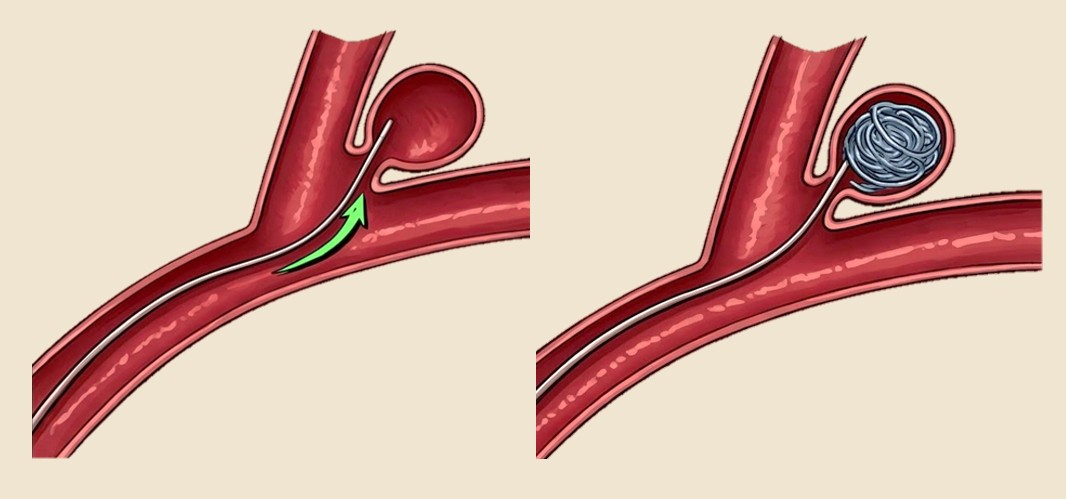
Aneurysm coiling is a minimally invasive endovascular procedure in which tiny platinum coils are placed inside the aneurysm through a catheter. The coils promote clot formation within the aneurysm, preventing blood flow into the weakened sac and reducing the risk of rupture.
Benefits of Aneurysm Coiling
- No open brain surgery
- Smaller incisions
- Faster recovery
- Shorter hospital stay
- Reduced postoperative discomfort
- Effective aneurysm occlusion
- Lower risk of complications in selected patients
What is Balloon-Assisted Coiling?
Balloon-assisted coiling is an advanced technique used for wide-necked aneurysms that are difficult to treat with standard coiling alone.
During the procedure, a temporary balloon is inflated across the aneurysm neck while coils are placed. The balloon helps keep the coils securely inside the aneurysm and prevents them from protruding into the parent blood vessel.
Advantages of Balloon-Assisted Coiling
- Improved coil stability
- Better treatment of complex aneurysms
- Enhanced aneurysm occlusion
- Preservation of normal blood flow
- Increased procedural safety
What is Stent-Assisted Coiling?
Stent-assisted coiling is used for large, complex, or wide-necked aneurysms. A small metal stent is permanently placed within the parent artery to act as a scaffold, supporting coil placement inside the aneurysm.
The stent helps maintain normal blood vessel structure while reducing blood flow into the aneurysm.
Benefits of Stent-Assisted Coiling
- Ideal for complex aneurysms
- Improved long-term aneurysm closure
- Better coil retention
- Reduced recurrence risk
- Preservation of critical blood vessels
- Effective treatment for challenging aneurysm anatomy
How is the Procedure Performed?
- Step 1: Vascular Access
A catheter is inserted through an artery in the wrist or groin. - Step 2: Advanced Imaging Guidance
Using real-time fluoroscopic imaging, the catheter is navigated to the aneurysm within the brain. - Step 3: Device Placement
Depending on the aneurysm type, coils alone, a balloon-assisted technique, or a stent-assisted technique is used. - Step 4: Aneurysm Occlusion
The aneurysm is sealed off from circulation while preserving blood flow through the normal artery. - Step 5: Recovery and Monitoring
Patients are closely monitored after the procedure and undergo follow-up imaging to assess treatment success.
Conditions Treated
These procedures are commonly used for:
- Unruptured brain aneurysms
- Ruptured intracranial aneurysms
- Wide-necked aneurysms
- Complex cerebral aneurysms
- Large aneurysms
- Recurrent aneurysms
- High-risk aneurysms requiring preventive treatment
Recovery After Endovascular Aneurysm Treatment
Most patients experience a faster recovery compared to traditional open surgery.
Recovery may include:
- Short hospital stay
- Neurological observation
- Follow-up angiography or imaging
- Medication management
- Gradual return to daily activities
Regular follow-up is important to ensure long-term aneurysm stability.
Why Choose Our Neurointerventional Team?
- Expertise in complex brain aneurysm treatment
- Advanced endovascular and neurovascular procedures
- State-of-the-art imaging technology
- Minimally invasive treatment options
- Comprehensive stroke and neurovascular care
- Personalized treatment planning
- Dedicated multidisciplinary neuroscience team
Our goal is to provide safe, effective, and cutting-edge treatment for brain aneurysms while minimizing recovery time and maximizing patient outcomes.