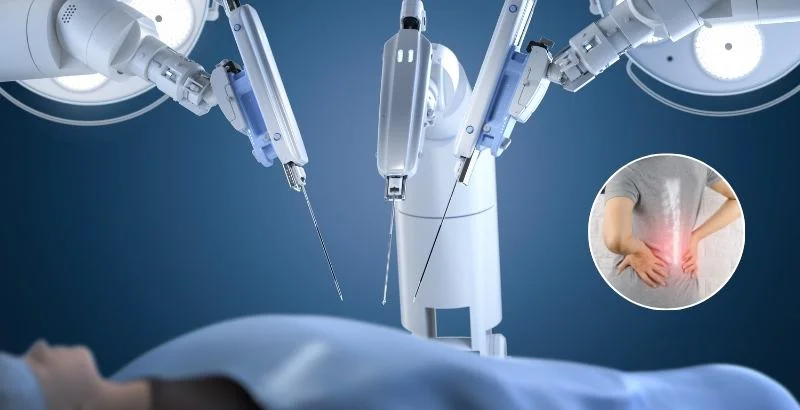
Minimally Invasive Spine Surgery (MISS) – Advanced, Precision Spine Care
Minimally Invasive Spine Surgery (MISS) is a modern surgical approach that treats spinal disorders through small incisions using specialized instruments, microscopes, or endoscopes. Unlike traditional open surgery, MISS avoids extensive muscle cutting, resulting in less pain, quicker recovery, and improved outcomes. It is widely used for both simple and complex spine conditions.
What is MISS?
MISS uses tiny incisions (often 1–2 cm) and image guidance (fluoroscopy or navigation) to reach the spine. Muscles are gently separated rather than cut, preserving normal anatomy. Surgeons perform precise procedures with minimal disruption to surrounding tissues.
Who Can Benefit?
MISS may be recommended if you:
- Have persistent back or neck pain not improving with medication or physiotherapy
- Experience nerve compression causing arm/leg pain, numbness, or weakness
- Have spinal stenosis, herniated disc, or instability
- Prefer faster recovery with less surgical trauma
Conditions Treated
- Herniated (slipped) disc
- Spinal stenosis
- Degenerative disc disease
- Spondylolisthesis
- Selected spinal fractures, infections, and tumors
Common MISS Procedures
-
Microdiscectomy
Removes herniated disc fragments pressing on a nerve.
-
Minimally Invasive Laminectomy
Decompresses nerves by removing a small portion of bone/ligament.
-
MISS Spinal Fusion (e.g., TLIF/PLIF)
Stabilizes the spine using screws/rods and bone grafts via small incisions.
-
Endoscopic Spine Surgery
Uses a camera-guided system for highly precise decompression.
How the Procedure Works
-
Preoperative Planning
MRI/CT/X-rays to identify the exact problem and plan the approach.
-
Surgery
Small incisions, tubular retractors, and real-time imaging guide the surgeon to the target area. The pathology (disc fragment, bone spur, ligament thickening) is treated with precision.
-
Closure
Minimal suturing due to small incisions.
Duration: Typically 45 minutes to 2 hours (varies by procedure).
Key Advantages
- Smaller incisions: Minimal scarring
- Less muscle damage: Better preservation of normal tissue
- Reduced pain: Lower need for pain medications
- Less blood loss and infection risk
- Short hospital stay: Often same-day or 1–2 days
- Faster recovery: Early mobilization and return to work
Recovery Timeline
- Walking: Within hours or the next day
- Daily activities: Within a few days
- Return to work: 1–3 weeks (desk jobs), longer for heavy work
- Full recovery: A few weeks, depending on the procedure
A structured rehabilitation plan improves outcomes.
Risks and Limitations
While generally safer than open surgery, possible risks include:
- Infection or bleeding
- Nerve injury (rare)
- Incomplete symptom relief
- Recurrence (e.g., disc herniation)
- Not suitable for every case (extensive deformity or multi-level disease may need open surgery)
MISS vs Traditional Open Surgery
| Feature | MISS | Open Surgery |
|---|---|---|
| Incision | Small | Large |
| Muscle damage | Minimal | Significant |
| Pain | Less | More |
| Hospital stay | Short | Longer |
| Recovery | Faster | Slower |
Success Rate
For conditions like herniated discs and spinal stenosis, MISS shows high success rates with significant pain relief and improved function when patients are appropriately selected.