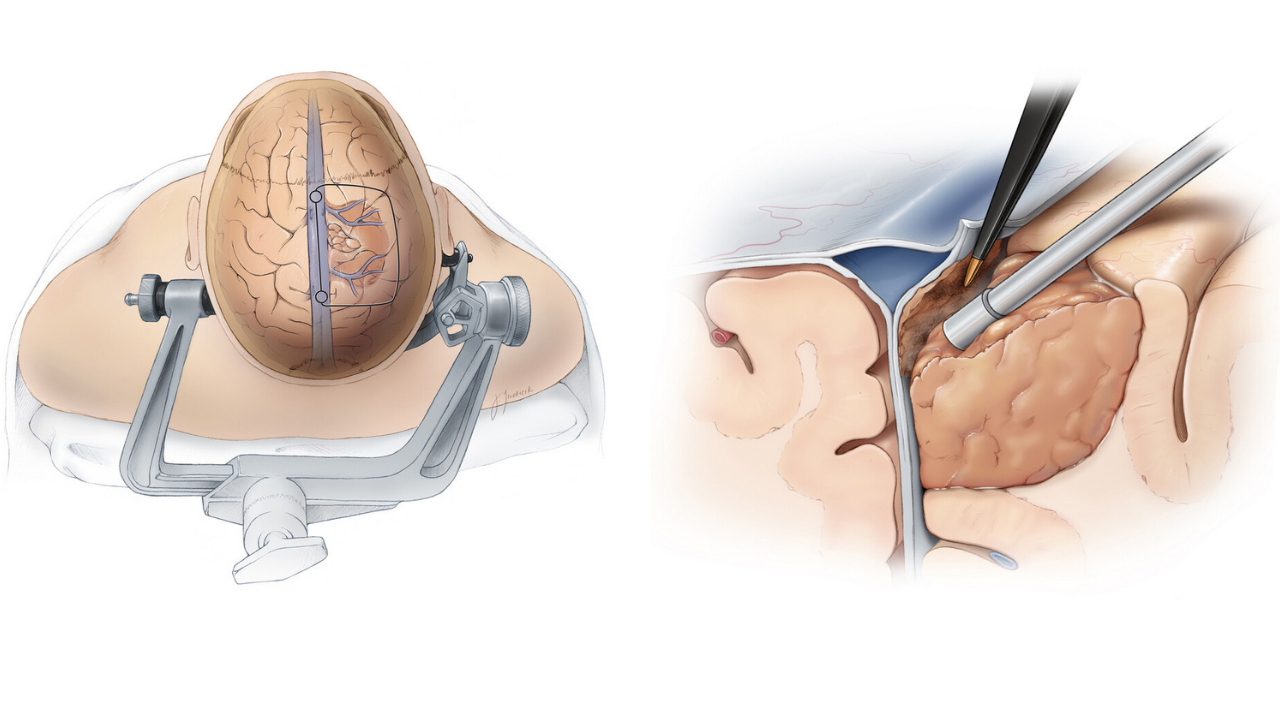
Latest Advances in Brain Tumor Surgery: Safer, Smarter & More Precise Treatments
Brain tumor surgery has evolved significantly over the past decade. Thanks to rapid technological innovation, modern neurosurgical techniques are now safer, more precise, and less invasive than ever before. These advances are improving patient outcomes, reducing complications, and enabling faster recovery.
Brain tumor surgery involves removing abnormal growths from the brain while preserving healthy tissue. It is often the first line of treatment for both benign and malignant brain tumors, depending on the tumor’s size, type, and location.
Latest Advances in Brain Tumor Surgery
1. Minimally Invasive & Endoscopic Brain Surgery
One of the most significant breakthroughs is the rise of endoscopic brain surgery. This technique uses a small camera (endoscope) inserted through tiny incisions or natural openings like the nose.
Benefits include:
- Smaller incisions
- Less pain and scarring
- Faster recovery
- Reduced hospital stay
This approach is especially effective for pituitary tumors and skull base tumors.
2. Image-Guided Neurosurgery (Neuronavigation)
Modern operating rooms now use image-guided systems, similar to GPS for the brain. These systems combine MRI or CT scans with real-time tracking to guide surgeons with extreme precision.
Advantages:
- Accurate tumor localization
- Reduced damage to healthy brain tissue
- Increased surgical safety
3. Awake Brain Surgery (Awake Craniotomy)
In certain cases, patients remain awake during surgery so surgeons can monitor critical brain functions like speech and movement.
Why it matters:
- Helps avoid damage to vital brain areas
- Improves functional outcomes
- Allows safer tumor removal in sensitive regions
4. Intraoperative MRI (iMRI)
Intraoperative MRI allows surgeons to take real-time images during the procedure. This helps confirm whether the tumor has been completely removed.
Key benefits:
- Higher tumor removal accuracy
- Reduced need for repeat surgeries
- Better long-term outcomes
5. Fluorescence-Guided Surgery
This technique uses special dyes that make tumor cells glow under specific lighting during surgery.
How it helps:
- Clearly distinguishes tumor from normal tissue
- Enables more complete tumor removal
- Improves surgical precision
6. Laser Interstitial Thermal Therapy (LITT)
LITT is a minimally invasive procedure that uses laser energy to destroy tumor cells.
Advantages:
- No large incisions
- Shorter recovery time
- Suitable for deep or hard-to-reach tumors
7. Robotic-Assisted Brain Surgery
Robotics is enhancing surgical precision and control. Robotic systems assist neurosurgeons in performing delicate procedures with greater accuracy.
Benefits:
- Enhanced precision
- Reduced human error
- Improved outcomes in complex cases
8. Artificial Intelligence (AI) in Neurosurgery
AI is playing a growing role in diagnosis, surgical planning, and intraoperative decision-making.
Applications include:
- Tumor detection and classification
- Predicting surgical outcomes
- Assisting in personalized treatment planning
9. 3D Visualization and Augmented Reality (AR)
Advanced 3D imaging and AR technologies allow surgeons to visualize the brain and tumor in greater detail.
Impact:
- Better pre-surgical planning
- Improved surgical navigation
- Increased safety
Benefits of Modern Brain Tumor Surgery
Thanks to these innovations, patients can now experience:
- Higher success rates
- Lower risk of complications
- Faster recovery
- Improved quality of life
- More personalized treatment
Are These Advances Making Surgery Safer?
Yes, these modern technologies have significantly improved the safety and effectiveness of brain tumor surgery. By enhancing precision and minimizing invasiveness, they reduce risks and improve outcomes.
However, the success of surgery still depends on:
- Tumor type and location
- Patient’s overall health
- Surgeon’s expertise
- Availability of advanced technology
Future of Brain Tumor Surgery
The future looks promising, with ongoing research focused on:
- Gene-guided surgical techniques
- Advanced AI integration
- Non-invasive tumor treatments
- Personalized neurosurgical care
These innovations will continue to push the boundaries of what is possible in brain tumor treatment.
Conclusion
The latest advances in brain tumor surgery are transforming patient care. From minimally invasive techniques to AI-powered precision, these innovations are making procedures safer, more effective, and less traumatic.
If you or a loved one is facing a brain tumor diagnosis, consulting an experienced neurosurgeon can help you explore the most advanced and suitable treatment options.